
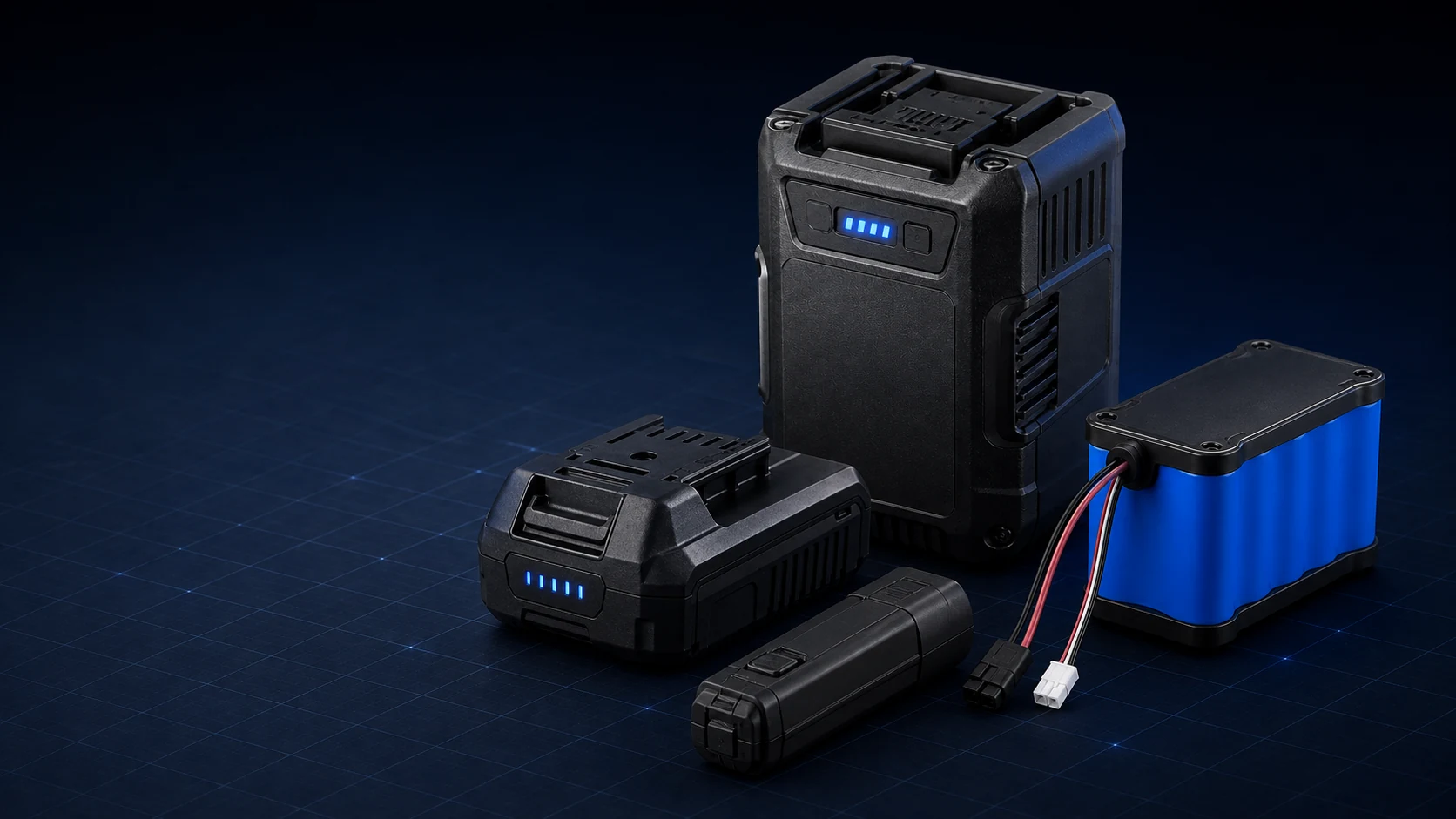
Power Tool, OPE & Small Equipment
Battery Platforms Built
Around the Real Machine
Three representative directions for new tool platforms, outdoor power equipment and machine-specific battery modules—developed around load, duty cycle, interface and charger requirements.
CHOOSE A PRODUCT DIRECTION
Three Machine Types.
One Platform-Level Review.
Choose the closest equipment direction, then confirm the battery around the actual load, mechanical interface, charger and operating environment. These are representative platforms rather than fixed catalogue models.
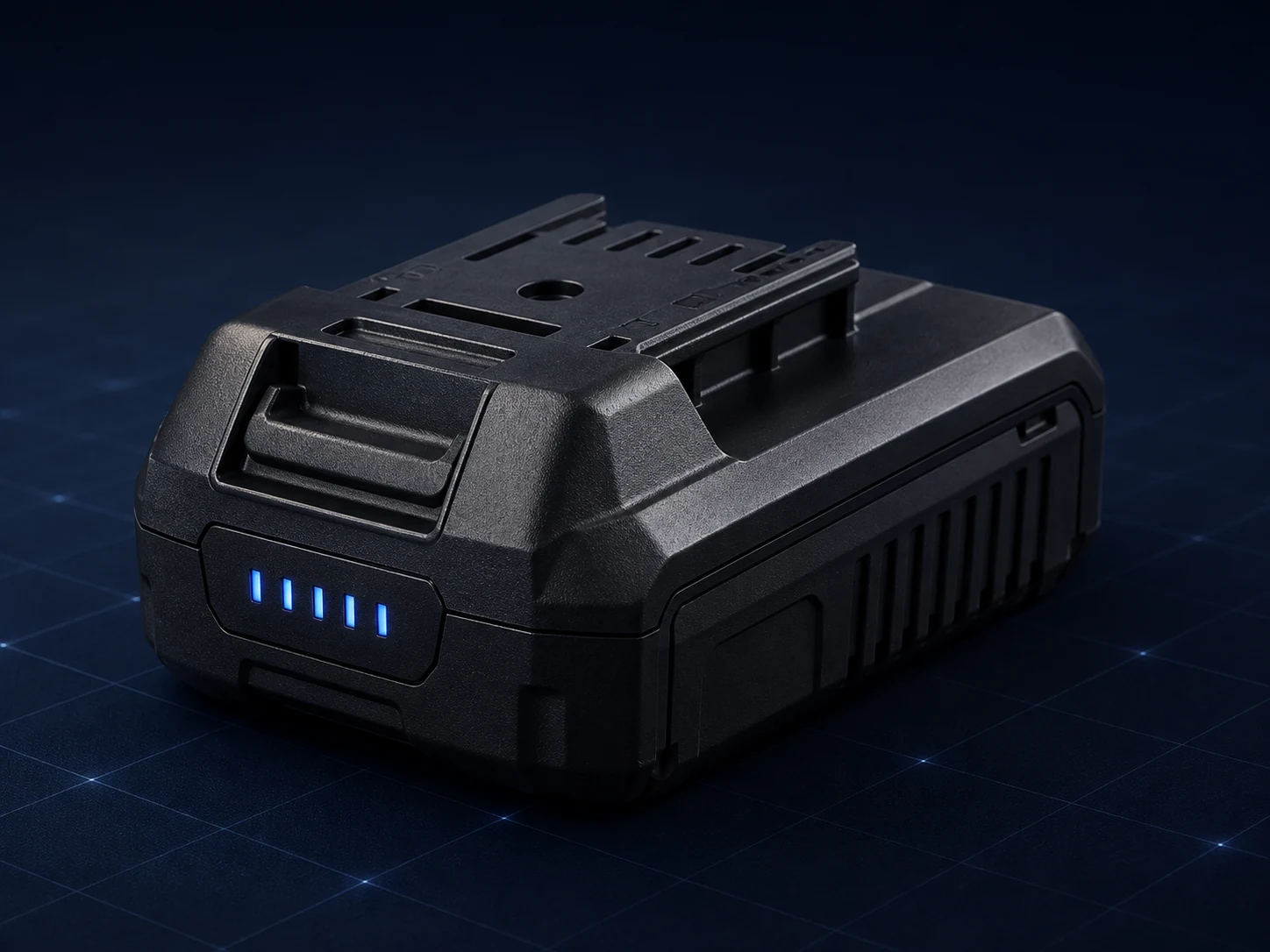
01COMPACT TOOL PLATFORM
Compact Tool Platform Packs
For new cordless tool platforms that need a compact removable pack coordinated with the tool load, charger and interface from the start.
Peak current, stall behaviour, rail and charger reviewed together
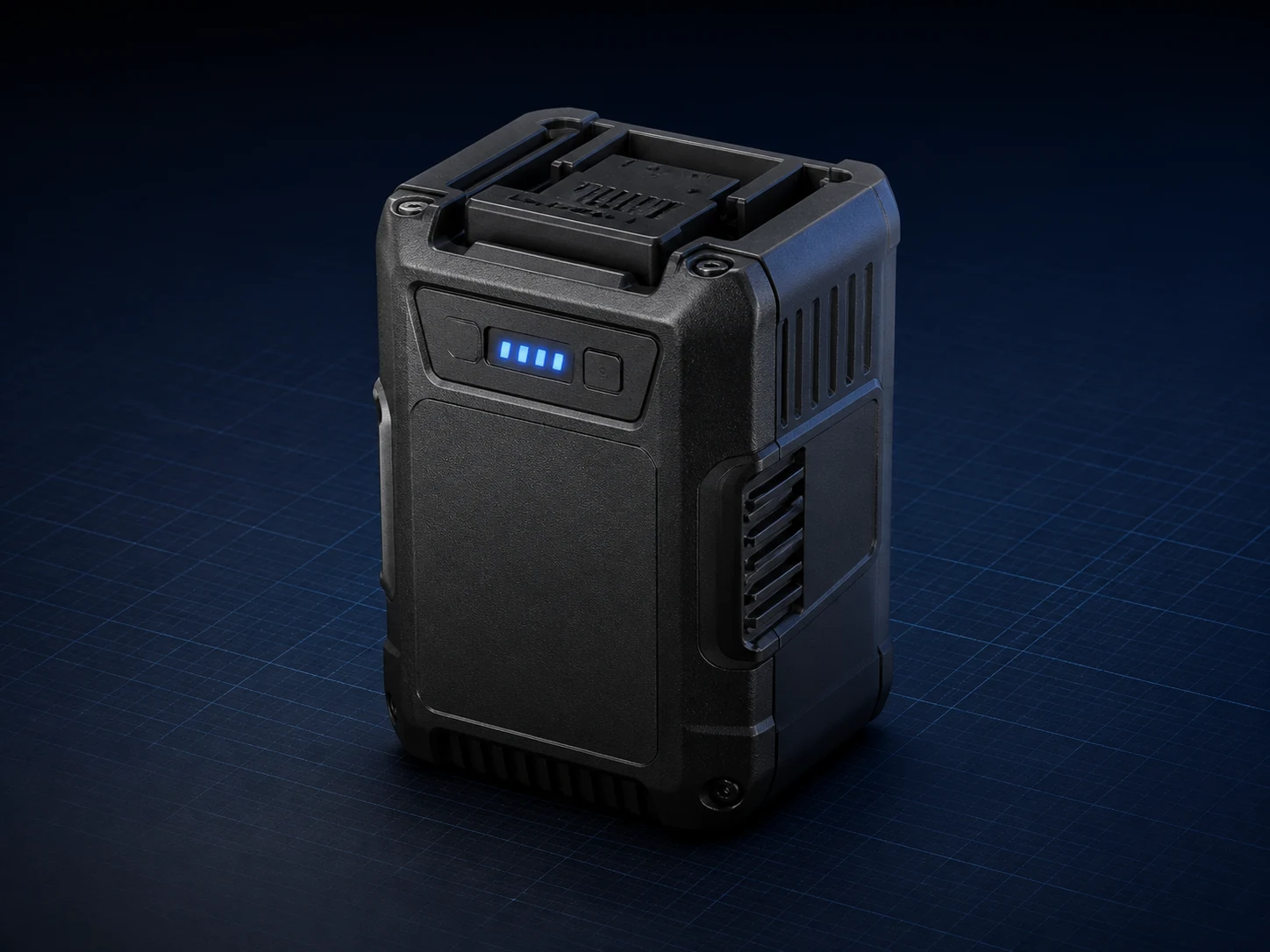
02HIGH-POWER OPE PLATFORM
High-Power OPE Battery Packs
For garden and outdoor power equipment where sustained output, temperature, impact and environmental exposure shape the pack direction.
Duty cycle, thermal path, retention and ingress reviewed together
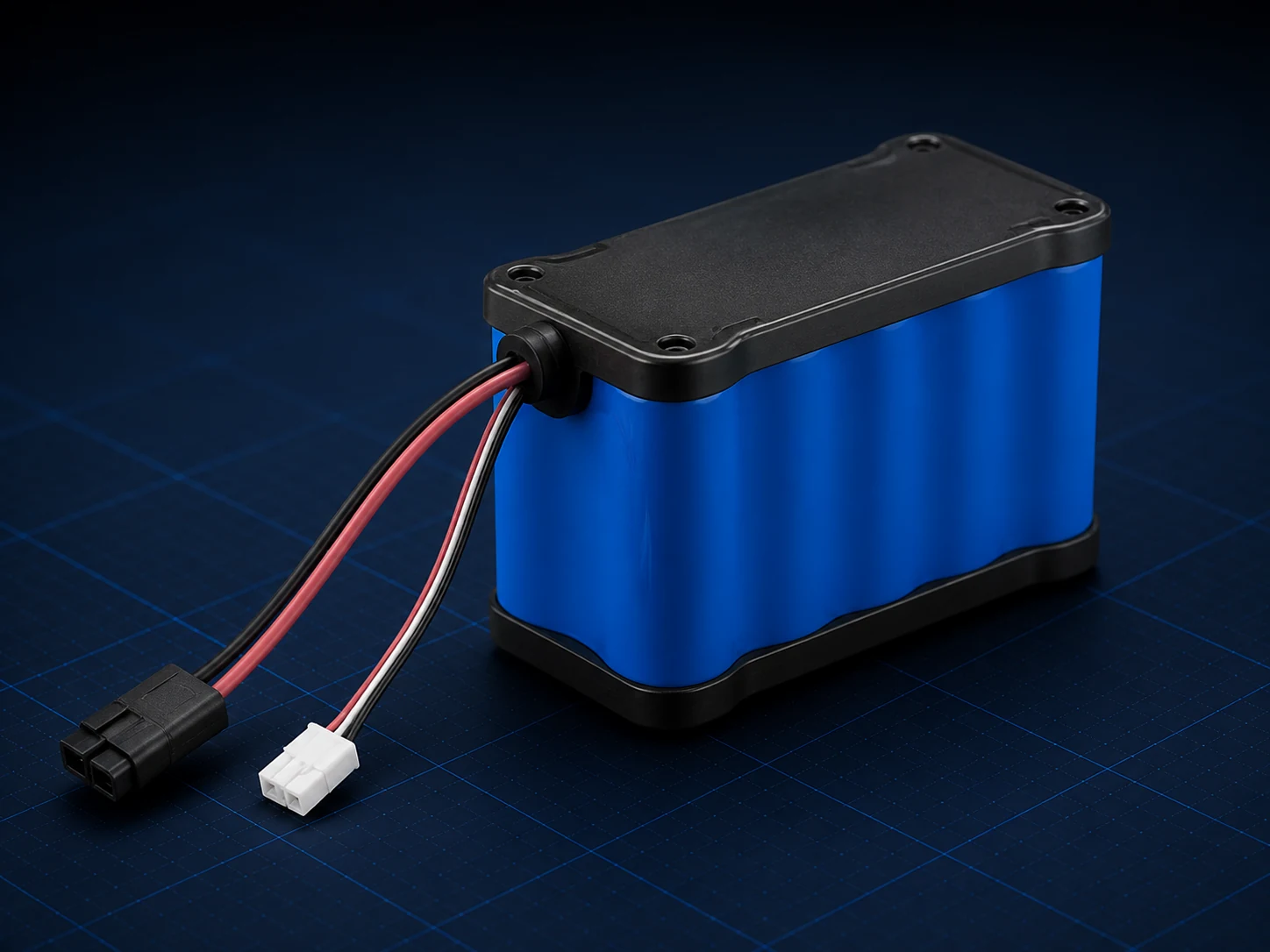
03MACHINE-SPECIFIC MODULE
Dedicated Small-Equipment Modules
For cordless cleaning and compact automated equipment that needs a battery built around its internal space, harness and service method.
Envelope, wiring, sensing and replacement path reviewed together
Product images show representative directions only. Exact cell format, housing, interface, availability and specifications are confirmed after technical review.
TOOL, BATTERY & CHARGER INTEGRATION
Build the Pack
Around the Load.
A working battery platform is more than a housing and connector. Cell selection, interconnects, thermal behaviour, protection electronics, charger strategy and machine response must be reviewed as one system.
01
Load Profile & Duty Cycle
Stall current, peak demand, continuous load, rest intervals and operating temperature establish the electrical target.
02
Cells, Structure & Thermal Path
Cell format, series/parallel layout, carriers, interconnects, insulation and heat flow follow the real machine demand.
03
Interface, Charger & Release
Housing, latch, terminals, sensing, charger interlock and the approved platform configuration are reviewed together.
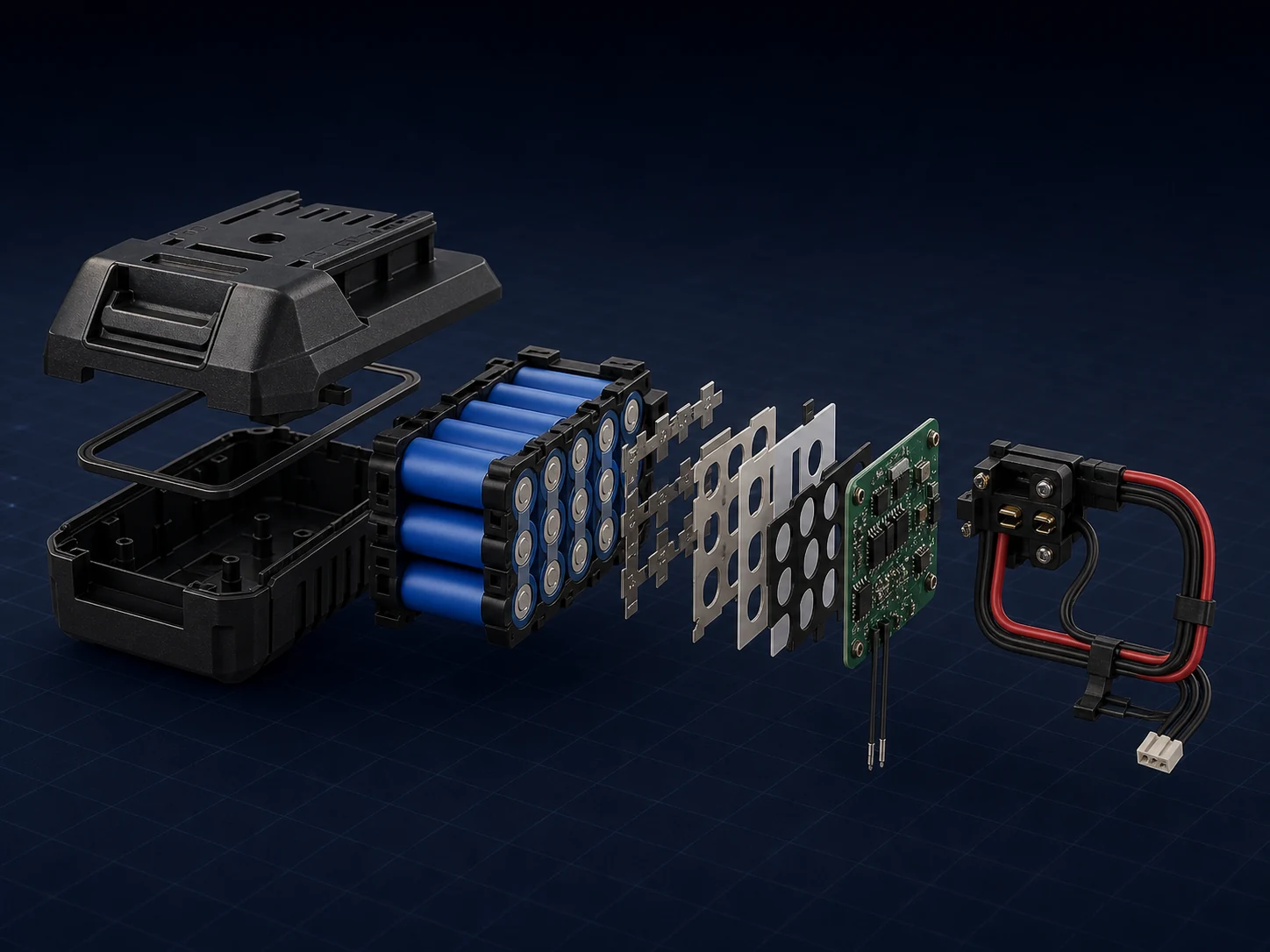
Representative high-capacity tool-pack architecture. Final cell arrangement, interconnects, electronics, housing and interface vary by equipment and project requirements.
TECHNICAL REVIEW STARTS WITH
Six inputs connect the real machine demand to the pack, charger and platform release direction.
01
Equipment & Load
02
Duty Cycle
03
Thermal Direction
04
Mechanical Protection
05
Interface & Charger
06
Platform Scope
VALIDATION & DOCUMENTATION
Release Against the
Machine, Not a Guess.
The pack is released against an agreed tool or equipment requirement. Validation and documentation follow the intended platform, target market and project responsibility—not a generic compatibility claim.
01
Requirement & Load Review
Equipment, motor load, duty cycle, charger and target environment.
02
Prototype & Interface Check
Electrical behaviour, pack structure, rail, latch, terminals and fit.
03
Machine & Duty Validation
Peak load, temperature, runtime, charging and intended-use conditions.
04
Controlled Platform Release
Approved configuration, traceability and project document path.
REPRESENTATIVE PROJECT EVIDENCE
Agreed platform requirement record
Machine, interface and duty-test record
Approved configuration and release path
BEST FIT
Projects This Series Is Built For
- New OEM and private-label tool battery platforms
- Regional garden and outdoor equipment brands
- Cordless cleaning and compact-equipment OEM projects
PROJECT BOUNDARY
Requests That Need a Different Path
- Unauthorized copies of closed branded battery interfaces
- One-off generic consumer replacement purchases
- Housing or connector swaps without machine and charger validation
START A TOOL OR EQUIPMENT BATTERY PROJECT
Share the Machine,
Load and Interface.
Share the closest available equipment, load and mechanical information. Missing technical details can be organized during the requirement review.
USEFUL INFORMATION FOR THE FIRST REVIEW
01
Equipment and tools covered by the platform
02
Voltage window, energy and runtime target
03
Load curve, peak or stall-current information
04
Duty cycle, temperature and environment
05
Mechanical envelope, interface and charger
06
Annual volume, target market and lifecycle plan